

Accessibility Audit
We start with a manual and automated audit of your website to identify accessibility issues based on WCAG 2.1/2.2 guidelines.
Is your website fully accessible to all users—including those with disabilities? At Accessibility Partners, we provide expert website accessibility remediation services to help organizations across Canada meet WCAG, AODA, and ACA compliance standards.
Our experienced team identifies and fixes accessibility barriers that affect usability, legal compliance, and user trust. Whether you’re a public-sector agency, private business, or nonprofit, we’ll help you create an inclusive, user-friendly digital experience.
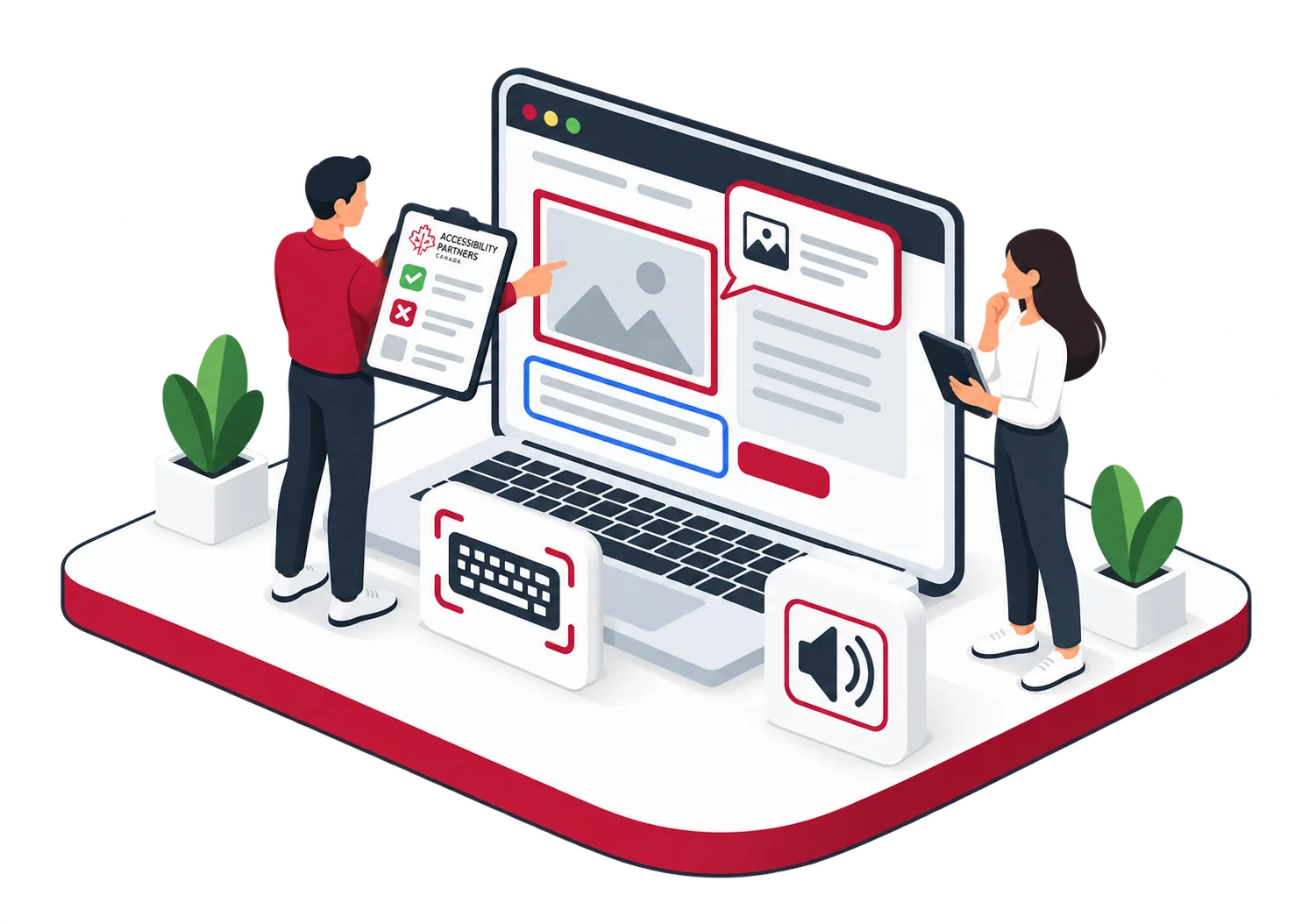
Website accessibility remediation is the process of fixing barriers on your website that prevent people with disabilities from using it effectively. These barriers are often identified during an accessibility audit and are resolved through technical adjustments to the design, structure, and content of your site.
Remediation addresses issues such as:

Missing alt text on images
Poor color contrast
Non-keyboard accessible elements
Inconsistent heading structures
Inaccessible forms or PDFs
In Canada, digital accessibility is not just best practice—it’s a legal requirement under the Accessibility for Ontarians with Disabilities Act (AODA) and the Accessible Canada Act (ACA). Non-compliance can result in fines, lawsuits, and reputational damage.
Beyond legal risks, remediation is essential for:
Expanding your reach to the 27% of Canadians who live with a disability (Canadian Survey on Disability, 2022)
Improving user experience across devices and assistive technologies
Enhancing SEO rankings by aligning with technical best practices
Demonstrating your organization’s commitment to equity and inclusion
We follow a proven, step-by-step remediation process to help you achieve compliance and inclusivity:
We start with a manual and automated audit of your website to identify accessibility issues based on WCAG 2.1/2.2 guidelines.
We provide a clear roadmap that classifies issues by severity (critical, moderate, minor) and outlines recommended fixes.
Our team of remediation experts updates your site’s code, structure, and content to meet accessibility standards—without disrupting your design.
We perform compliance re-checks using assistive tech (e.g., JAWS, NVDA), and provide you with a compliance statement or VPAT if required.
We offer monitoring and maintenance plans to keep your website compliant as standards evolve.
At Accessibility Partners Canada, we provide top-tier document accessibility remediation services, ensuring your documents are fully accessible and compliant with all legal standards. Here’s why choosing us is the best decision for your document remediation needs:
Our team includes CPWA-certified specialists, digital strategists, and developers with deep WCAG and AODA knowledge.
We’re trusted by all three levels of government, including CRA, Canada Post, BC ministries, and local municipalities.
From audit to implementation, we provide comprehensive accessibility services without outsourcing.
We test with users who rely on assistive technologies to ensure real usability—not just checklists.
We tailor every remediation project to your platform, goals, and budget—no cookie-cutter solutions.
We improve accessibility while enhancing your user experience, SEO, and brand reputation.
It depends on the size and complexity of your site. Simple fixes may take a few days, while large websites may need several weeks.
Yes! Our comprehensive web audits identify WCAG violations and provide a full remediation plan. Learn more about our accessibility audit reports.
Absolutely. Many accessibility practices align with SEO, such as semantic HTML, proper headings, alt text, and mobile optimization.
Start with an accessibility audit, then implement the recommended fixes. Our team can handle both the audit and remediation process.
Any organization with a public-facing website, especially those governed by AODA, ACA, or ADA, should consider remediation.
The best way is to conduct an audit using a mix of automated tools and manual testing with assistive technologies.
