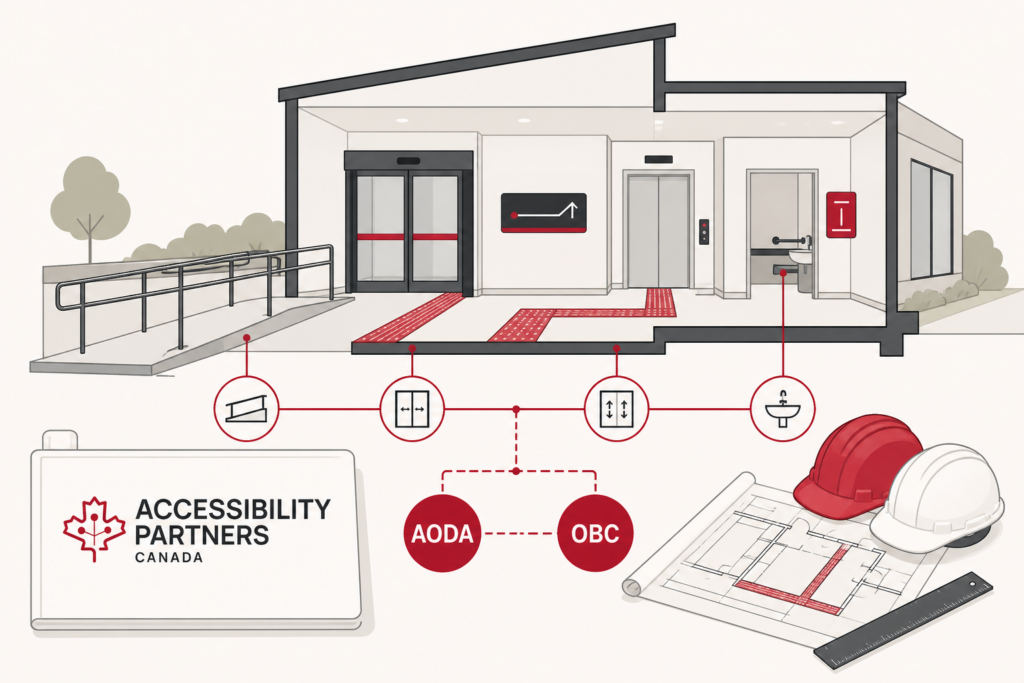
The Accessibility for Ontarians with Disabilities Act (AODA) is a landmark provincial law aiming to make Ontario barrier-free by 2025. It outlines clear legal accessibility mandates organizations must meet to achieve AODA compliance—not just as a best practice, but as mandatory legal obligation. Failure to comply invites significant AODA non‑compliance fines and serious penalties.
Update, September 2026: the 2025 AODA milestone has now passed; full accessibility was not achieved province-wide by that date.
Understanding AODA Compliance and Standards
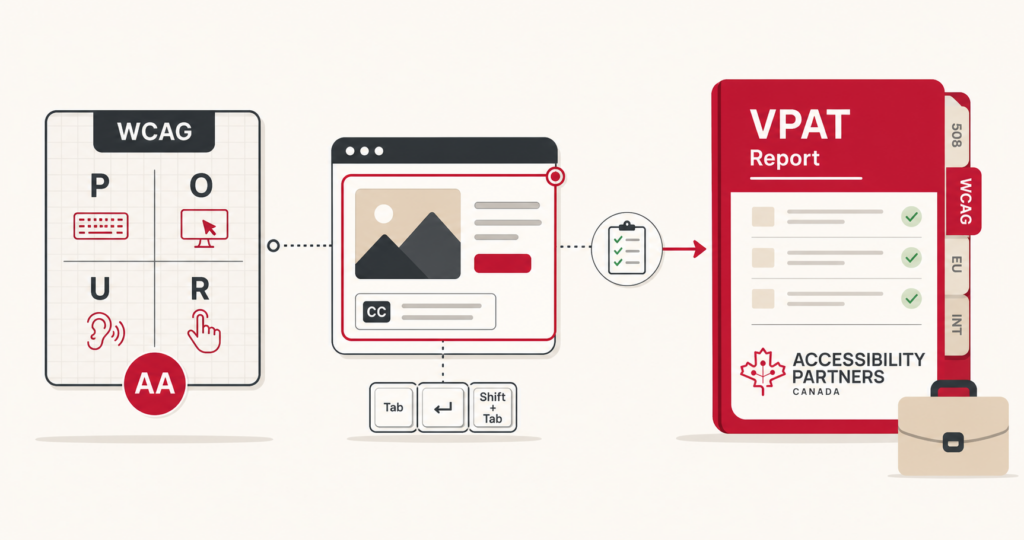
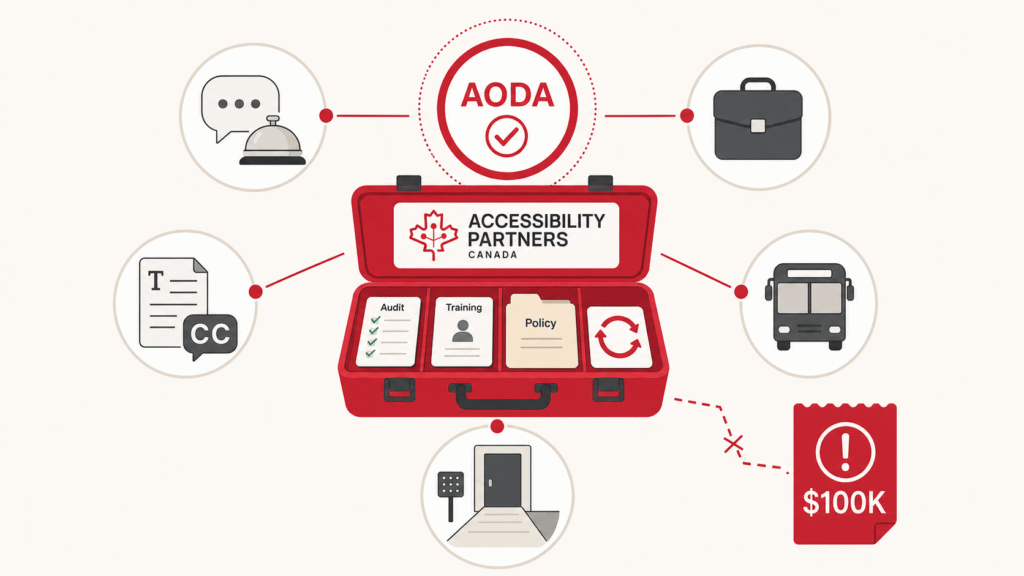
The AODA Act Ontario is backed by the Integrated Accessibility Standards Regulation (IASR). It includes key standards covering Customer Service, Information & Communications, Employment, Transportation, and the Design of Public Spaces. For many businesses, meeting web accessibility standards under AODA must align with WCAG 2.0 Level AA guidelines to fulfill AODA compliance Ontario requirements.
Why is AODA Compliance Important?
- Legal Obligations Under AODA: The Accessibility for Ontarians with Disabilities Act, 2005 (AODA) mandates accessibility across public and private sectors, including digital and physical spaces. Staff should receive AODA accessibility/IASR training to understand and meet (AODA) Ontario requirements.
- Avoid Penalties for Non-Compliance: Penalties are steep—corporations can face up to $100,000 per day, while individuals may be fined up to $50,000 per day.
- Broader Market Reach: Prioritizing accessibility opens your business to a broader audience. More than one in four Canadians aged 15 and over, 27%, live with one or more disabilities (Canadian Survey on Disability, 2022).
- Enhanced Brand Reputation: Compliance signals a commitment to inclusion, helping build trust and loyalty.
- Improved User Experience: Accessibility features such as navigable interfaces and readable content benefit all users—especially those with temporary or situational challenges.
- Competitive Advantage: Proactive businesses gain an edge by being seen as inclusive leaders in their sectors.
- Future-Proofing: The AODA standards (Accessibility for Ontarians with Disabilities Act) continue evolving—compliance now sets a solid foundation for future obligations.
Legal Obligations for Non-Compliance with AODA
Being AODA compliant extends across several areas. Here’s what businesses must address under the Accessibility for Ontarians with Disabilities Act, 2005 (AODA):
- Accessible Customer Service Policies: Provide AODA accessibility/IASR training, accept service animals, offer accessible ways to give feedback, and communicate in plain language.
- Information & Communication Accessibility: Digital content must meet web accessibility standards (WCAG 2.0 AA), with accessible alternatives like large print, braille, or captions.
- Inclusive Employment: Tailor recruitment processes, workplace accommodations, and accessible training materials for employees with disabilities.
- Accessible Transportation: Offer accessible vehicles and clear communications, especially for public transit providers.
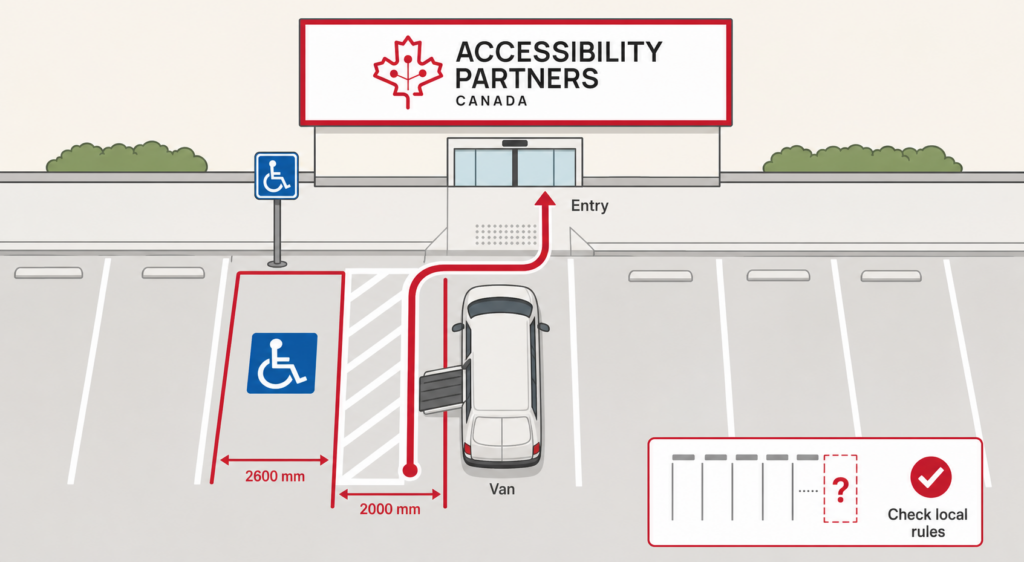
- Accessible Public Spaces: New builds or renovations must include accessible parking, pathways, washrooms, and tactile signage.
Meeting these AODA compliance obligations not only avoids legal repercussions but also reinforces your organization’s commitment to inclusivity.
Penalties for AODA Non-Compliance
Under the Accessibility for Ontarians with Disabilities Act (AODA), AODA enforcers can levy serious penalties:
- Individuals & Unincorporated Entities: $200–$2,000 for minor infractions; higher penalties for major or repeated violations. Moderate penalties: $250–$1,000; major violations: up to $2,000.
- Corporations: Same scale applies, with fines up to $15,000 for major violations.
- Maximum Daily Fines: For severe, repeated breaches, corporations may face up to $100,000 per day, while individuals may be fined up to $50,000 daily.
These administrative penalties are set out in Ontario Regulation 191/11 (Integrated Accessibility Standards).
These fines reflect the significant legal risk of missing accessibility requirements.
How to Avoid Penalties Under AODA
- Conduct Accessibility Audits: Evaluate your physical spaces and digital platforms. Ensure your website meets WCAG 2.0 Level AA, per the Accessibility for Ontarians with Disabilities Act, 2005 (AODA).
- Train Your Staff: Provide AODA accessibility/IASR training to ensure your team understands accessibility laws and best practices.
- Implement Inclusive Policies: Develop written accessibility policies, accommodation procedures, and customer service standards—available in accessible formats.
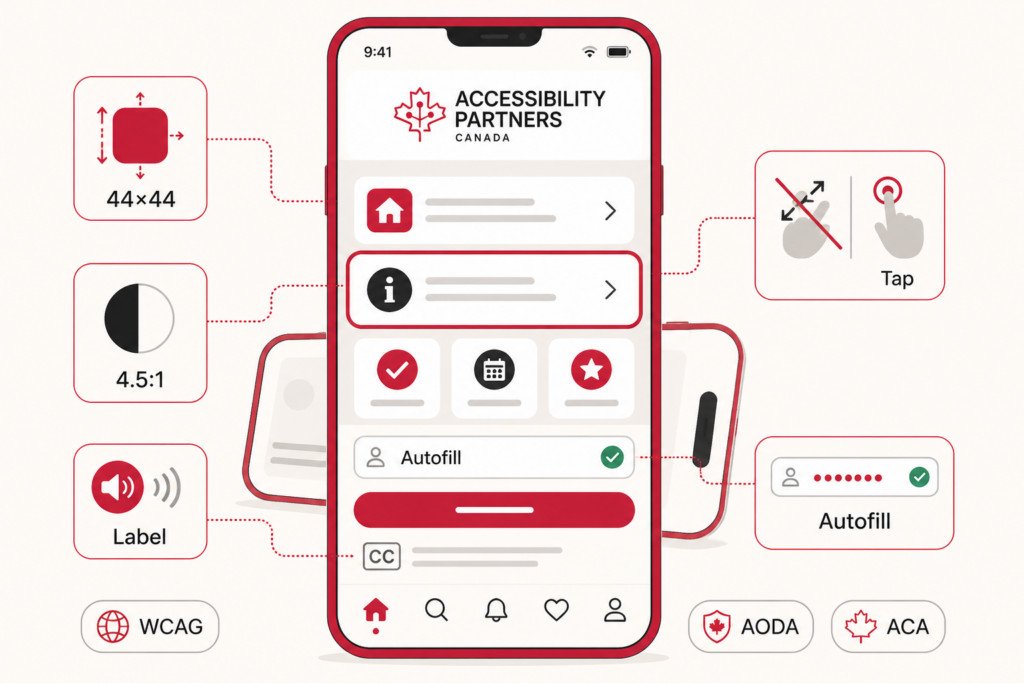
- Ensure Digital Accessibility: Align websites and apps with WCAG, including screen reader compatibility and accessible multimedia.
- Ongoing Monitoring: As the Ontario accessibility act evolves, continuously review and update your accessibility practices.
In doing so, you reduce risk and commit to ongoing accessibility.
How Accessibility Partners Supports Your AODA Compliance
Accessibility Partners helps simplify your path to AODA compliance Ontario:
- We begin with a comprehensive audit of your digital platforms, documents, and internal policies to identify accessibility gaps.
- We then create a customized remediation plan to align your content with web accessibility standards.
- We deliver AODA accessibility/IASR training, equipping your employees with the knowledge to maintain accessibility.
- We assist in updating or drafting your accessibility policies.
- We offer ongoing support to ensure your organization remains compliant with evolving AODA requirements.
Let us help you confidently meet your obligations under the Ontarians with disabilities act aoda.
Conclusion
Understanding your legal accessibility obligations under AODA and actively pursuing compliance is more than a legal safeguard—it’s a commitment to accessibility that benefits all stakeholders. Compliance boosts your reputation, expands your audience, and avoids costly penalties.
Need expert support navigating AODA compliance for websites and organizations? Contact Accessibility Partners for guidance and support to help you confidently achieve and maintain accessibility.