Accessible parking plays a vital role in creating inclusive spaces for individuals with disabilities. In Canada, meeting accessible parking requirements is not just about compliance—it’s about fostering an environment where everyone can navigate with ease and dignity.
This guide explores the essential aspects of accessible parking requirements in Canada, from provincial standards to compliance strategies, helping you ensure inclusivity in your parking facilities.
What is Accessible Parking?
Accessible parking refers to designated parking spaces designed to accommodate individuals with disabilities. These spaces differ from standard parking in their dimensions, signage, and proximity to building entrances, ensuring ease of access for those using mobility aids like wheelchairs or walkers.
In Canada, accessible parking standards are governed by provincial building codes and municipal bylaws, informed by the voluntary CSA B651 standard. The Canadian Human Rights Act applies to federally regulated organizations, and provincial standards such as the Accessibility for Ontarians with Disabilities Act (AODA) and the respective provincial building codes. These standards establish clear guidelines for parking space dimensions, signage, and accessibility features.
Accessible Parking Requirements by Province
Accessible parking requirements can vary across Canadian provinces. Here’s an overview of key regulations, with a focus on Ontario:
Accessible Parking Requirements In Ontario
The standards that dictate the guidelines for Accessible Parking in Ontario are the Ontario Building Code (OBC), the Accessibility for Ontarians with Disabilities Act (AODA), and the Canadian Standards Association (CSA). The major factors that are considered for accessible parking are:
- Number of Spaces: The number of required accessible spaces depends on the size of the parking lot.
- Parking Stall Dimensions: The Parking stall needs to have the recommended width and length. The aisles adjoining the accessible parking stalls need to be as per the required dimensions.
- Signage Requirements: Clear and visible signage indicating the space is reserved for individuals with disabilities.
Accessible Parking Requirements In British Columbia
- Spaces must comply with the BC Building Code, ensuring wheelchair accessibility and proper signage. CSA standards such as B651 are voluntary national standards; they carry legal force only where a building code or regulation adopts them.
Accessible Parking Requirements In Quebec
- Accessible parking regulations in Quebec mandate appropriate signage and dimensions, with a focus on inclusivity in urban and suburban areas. CSA standards such as B651 are voluntary national standards; they carry legal force only where a building code or regulation adopts them.
Each province has unique requirements, but all of them aim to ensure parking facilities are accessible to individuals with disabilities.
Key Components of Accessible Parking
Accessible parking space requirements across Canada share several key components:
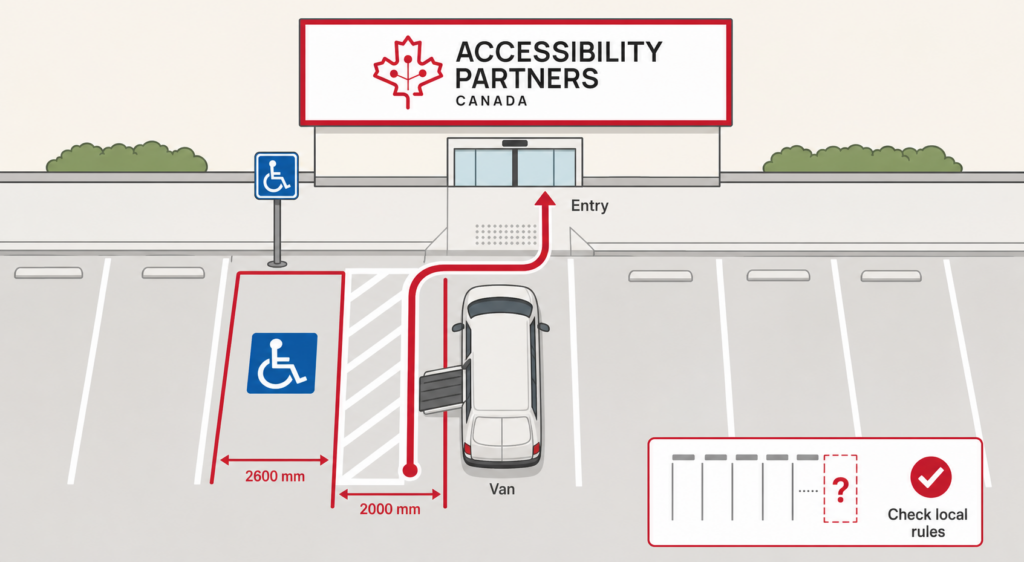
Accessible Parking Space Dimensions
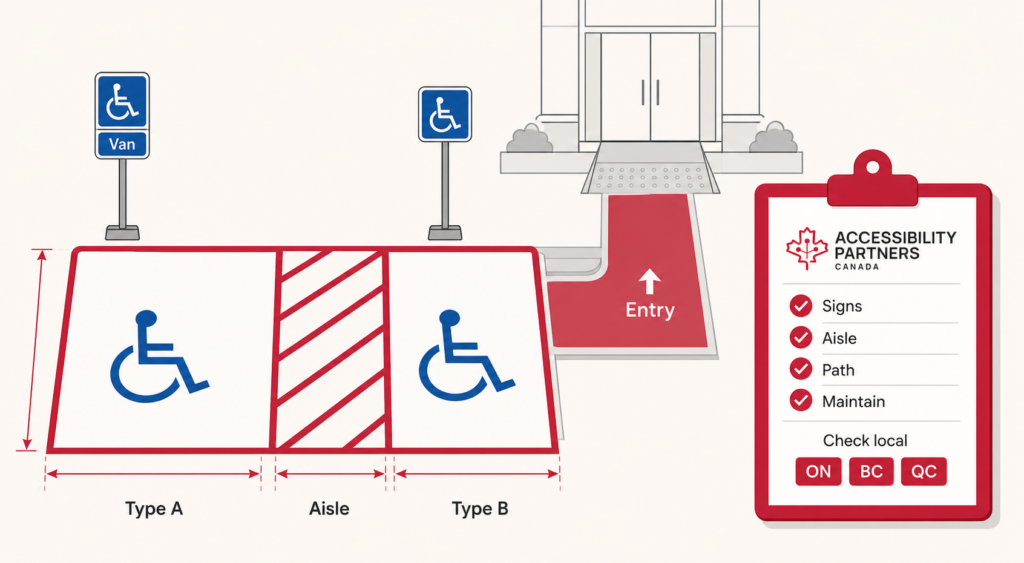
Parking spaces must be wide enough to accommodate vehicles equipped with lifts or ramps. There are generally two types of parking spaces –
- Type A: Type A is a van-accessible parking stall with wider dimensions.
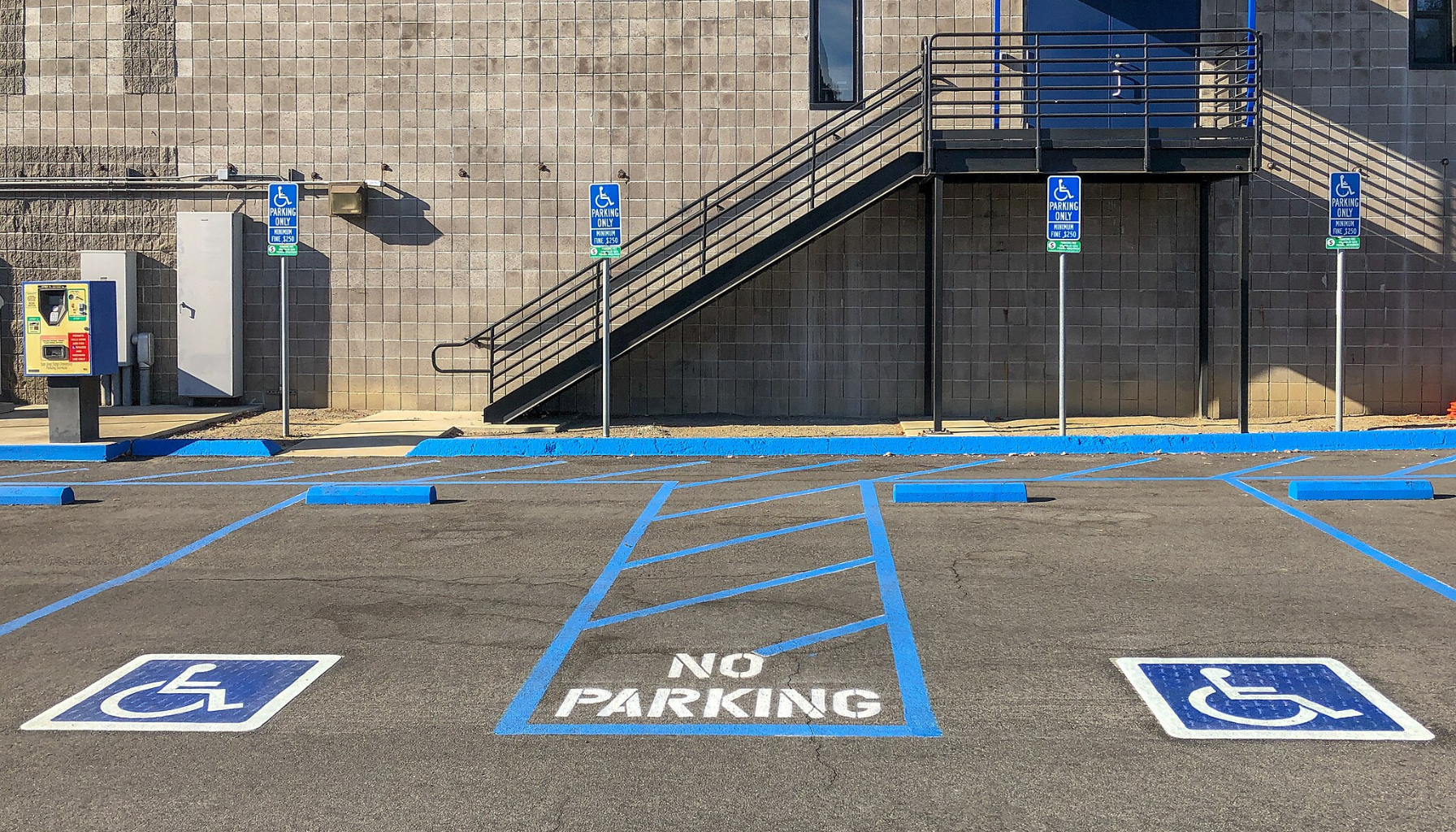
- Type B: is the general-sized accessible parking stall. An access aisle is always required adjacent to the parking stalls. One access aisle can be shared between two parking stalls.
Accessible Parking Signage
Signage should be prominently displayed, featuring the International Symbol of Access on the parking stall. Vertical signage in front of the stalls is required as well. Type A parking stalls require an additional ‘van accessible’ parking sign in front of it Signs must be clear, visible, and weather-resistant.
Required Accessible Parking Spaces
The number of required accessible parking spaces varies based on the total number of parking spaces in a lot. For example, in Ontario, at least one space is required for parking lots with 1-25 spaces while those with 26-50 spaces must have 2 accessible spaces. Larger lots with over 500 spaces require at least 11 accessible spaces, plus 2 additional spaces for every 100 spaces over 500 with increasing requirements for more larger lots.
Path to Accessible Parking Spaces
The accessible parking stalls need to be placed as close as possible to the Barrier-Free entrance of the building. The access aisle of the parking stall should be connected to the barrier-free entrance through the means of a dedicated sidewalk or pathway.
How to Ensure Compliance with Accessible Parking Requirements in Canada
Meeting accessible parking requirements involves more than following regulations—it’s about fostering inclusivity. Here’s how to ensure compliance:
Understand Legal Requirements
Accessible parking regulations vary by province, territory, and municipality. Familiarize yourself with federal, provincial, and municipal accessibility laws and standards to identify which ones apply to your site/building.
Consult Accessibility Expertṣ
Engage professionals for detailed accessibility audits and recommendations on the requirement of parking spaces to ensure they meet or exceed accessibility standards.
Adhere to Design Specifications
Incorporate the required number of accessible stalls with the appropriate dimensions, signage, and features to accommodate a range of disabilities.
Conduct Regular Inspections
Regularly inspect and repair parking spaces, signs, and paths of travel and ensure that parking spaces remain compliant over time by performing periodic audits and maintenance.
Stay Updated & Educate Staff
Accessibility laws and standards can evolve. Keep up-to-date to maintain compliance. Also, train staff on accessible parking enforcement and provide clear information to patrons about the location and use of accessible spaces.
Conclusion
Accessible parking is more than a legal requirement—it’s a commitment to inclusivity and equity. By understanding accessible parking requirements in Canada and taking steps to comply, businesses and organizations can create welcoming environments for all individuals. From provincial standards to practical compliance tips, this guide provides the foundation to ensure accessible parking for your facility.
By following these guidelines, you can ensure that your parking facilities are not only compliant but also truly accessible, creating a positive experience for everyone.
For more insights on accessibility compliance, visit Accessibility Partners.