Understanding AODA training requirements is essential for every organization in Ontario. The Accessibility for Ontarians with Disabilities Act (AODA) mandates that employees, volunteers, and other personnel receive accessibility training aligned with their job duties. This includes businesses, nonprofits, educational institutions, and government agencies.
Whether you’re asking “what is AODA training”, or you’re an administrator searching for AODA training requirements for educational institutions or administrative assistants, this guide has you covered.
Who is Responsible for AODA Training?
Employers are legally responsible for ensuring AODA training is provided and documented. This includes:
- Business owners
- School administrators
- Hospital and healthcare managers
- Nonprofit leadership
Even in small organizations, the responsibility cannot be delegated entirely without oversight. Leaders must ensure that training is relevant, consistent, and regularly reviewed to match evolving accessibility standards.
If you manage staff, including educational institution staff or administrative assistants in schools, it’s your duty to ensure they complete their required AODA training.
Who Needs AODA Training?
According to AODA training requirements Ontario, anyone who:
- Interacts with the public
- Develops organizational policies
- Delivers goods, services, or facilities
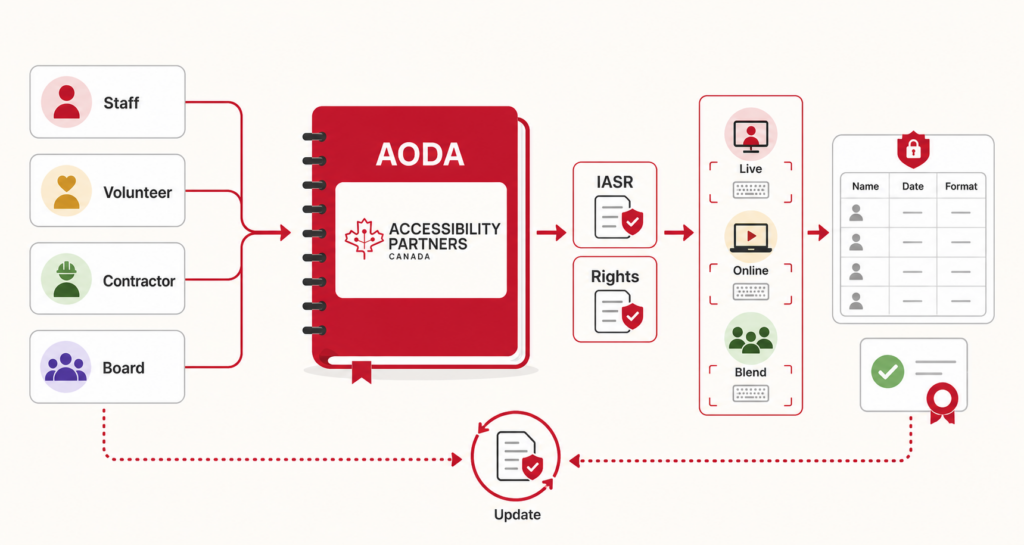
…must receive AODA training. This includes:
- Full-time and part-time employees
- Contractors and volunteers
- Board members
- Administrative and support staff in schools and institutions
Even employees with limited public interaction may require training depending on their role, particularly if they influence decision-making or contribute to policy development. For example, IT staff who manage website accessibility or HR personnel creating employee policies should also undergo training.
AODA Training Requirements
The required content for AODA training includes:
- The Integrated Accessibility Standards Regulation (IASR)
- The Ontario Human Rights Code (as it pertains to accessibility)
Training must be job-specific, updated with policy changes, and delivered in a timely fashion (ideally within weeks of onboarding). In addition, AODA training should be engaging and interactive to ensure understanding. Case studies, real-life scenarios, and role-playing can enhance learning and retention.
Is AODA training required annually?
No – but refresher training is highly recommended every 1–2 years or when policies change.
Organizations that schedule refresher training regularly see greater engagement and a stronger organizational culture of accessibility. For example, refresher sessions can coincide with policy reviews or organizational changes to reinforce the importance of accessibility in everyday operations. Educational institutions have additional responsibilities related to AODA training requirements for school staff and content developers.
AODA Training Process
Here’s a clear, step-by-step process businesses in Ontario should follow:
- Identify who needs training: Include all staff, volunteers, and contractors involved in service delivery or policy creation.
- Choose the right training content: Ensure it covers IASR + Human Rights Code, tailored to the employee’s role.
- Deliver the training: Options include in-person sessions, e-learning modules, or blended formats. Ensure content is accessible.
- Track completion: Use a training log or system that records names, completion dates, and delivery format.
- Review regularly: Update training whenever policies, procedures, or laws change.
Keep Track of Training Records
As per AODA training record requirements, every organization must document:
- Full name of the employee or trainee
- Date the training was completed
- Location or method of delivery (online, in-person, etc.)
Keeping detailed training records not only meets compliance requirements but also helps organizations track accessibility progress over time. Implementing a centralized record-keeping system can make this process easier and more efficient.
These records may be requested during inspections or accessibility audits and should be stored securely.
How Can Accessibility Partners Help with AODA Training?
Accessibility Partners provides end-to-end support for all your AODA training needs. We offer:
- Tailored training for specific industries or teams
- AODA compliance modules for education, retail, health care, and more
- Tools to help you track training records as per Ontario regulations
- Updates when legislation or standards change
Our team also supports organizations across Canada with jurisdiction-specific accessibility education and accessibility compliance training for newfoundland and labrador, helping employers build accessibility awareness and meet evolving compliance obligations.
Whether you’re a small business or a large institution, we can help you train smarter and stay compliant.
Conclusion
Meeting your AODA training requirements is not only the law, it’s a commitment to creating inclusive, barrier-free workplaces across Ontario. By implementing proper training and maintaining accurate records, your organization can confidently support accessibility for all. Accessibility is a continuous journey. Regularly reviewing training, updating materials, and involving employees in accessibility discussions ensures long-term success.
Need help with setup, tracking, or delivery?
Contact Accessibility Partners for expert AODA training solutions.