
The Ultimate WCAG 2.1 Guideline to Better Your Website’s Design
Today, websites serve as windows to services, communities, and opportunities. With our world increasingly online, ensuring equal access for all users has become more urgent than ever.
As new laws and policies emerge in Canada and globally, the Web Content Accessibility Guidelines (WCAG) by the World Wide Web Consortium (W3C) remain the foundation for inclusive digital experiences. The most current version, WCAG 2.1, enhances support for mobile, low vision, and cognitive disabilities, making it essential for today’s digital accessibility planning.
This blog equips you with actionable insights for understanding WCAG 2.1 guidelines, meeting AODA compliance requirements, and building accessible, compliant websites in Canada that better serve diverse audiences.
Understanding WCAG 2.1’s Accessibility Standards
WCAG provides technical guidance to help businesses and web designers build inclusive websites. Introduced by the W3C, the Web Content Accessibility Guidelines (WCAG 2.1) address evolving web use with a special focus on:
- Mobile device compatibility
- Low-vision support
- Cognitive accessibility improvements
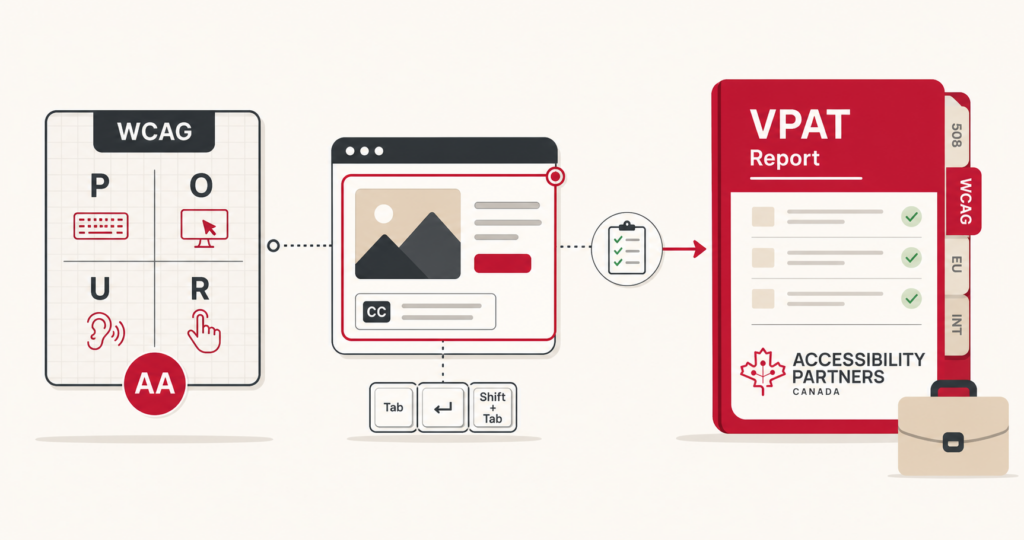
WCAG 2.1 builds upon previous versions with 13 existing and 17 new success criteria. The standards are built around four core principles:
- Perceivable: Users must be able to perceive content regardless of disability
- Operable: Interfaces must be navigable via keyboard and assistive devices
- Understandable: Content and navigation must be consistent and predictable
- Robust: Content must work across a wide range of assistive technologies and devices
Understanding WCAG guidelines is not about checking boxes, it’s about building inclusive digital experiences that benefit all users.
What’s New in WCAG 2.1 Compared to WCAG 2.0?
WCAG 2.1 introduces 17 new success criteria that expand guidance for:
Mobile Accessibility:
- Better touch target spacing (e.g., for buttons on mobile devices)
- Orientation support (portrait/landscape switching)
Low Vision:
- Enhanced contrast requirements for non-text elements
- Improved focus indicators for navigation
Cognitive Disabilities:
- Input purpose identification (e.g., autofill fields)
- Labeling improvements for easier comprehension
These updates are especially relevant for WCAG website designers, compliance teams, and developers focused on responsive design and usability across devices.
How to Implement WCAG 2.1 in Website Design
Creating WCAG-compliant web design means integrating accessibility principles into every stage of the process. Below is how the four WCAG principles apply in real design contexts:
Perceivable
- Accessible Design & Layout:
Ensure responsive design that adapts to all screen sizes and avoids overlapping content. This helps meet web content accessibility guidelines 2.1 checklist items like flexible layouts. - Color & Contrast:
Use high-contrast color combinations (minimum 4.5:1 ratio for text) to ensure readability for users with low vision or color blindness. Tools like Chrome DevTools and Colour Contrast Analyser (CCA) help validate compliance. - Multimedia & Alternative Text includes:
- Alt text for images
- Captions for videos
- Transcripts for audio
- Audio descriptions for visual content in videos
Operable
- Keyboard Navigation & Focus Indicators:
Design your site to be fully usable without a mouse. Includes
- Sequential tabbing
- Skip-to-content links
- Visible focus indicators
- No keyboard traps
Understandable
- Forms & Input Assistance:
Make form fields accessible with:
- Clear labels and error messages
- Keyboard/tab order
- Responsive spacing
- Autofill and autocomplete support
- CAPTCHA alternatives
Robust
- Testing & Iteration:
Use both automated and manual tools to evaluate WCAG compliance. Tools include:- WAVE, Axe, and Lighthouse
- Screen readers (NVDA, JAWS, VoiceOver)
- User feedback and usability testing
Following the WCAG 2.1 guidelines summary ensures your website is compliant, usable, and inclusive.
The Impact of WCAG 2.1 Implementation
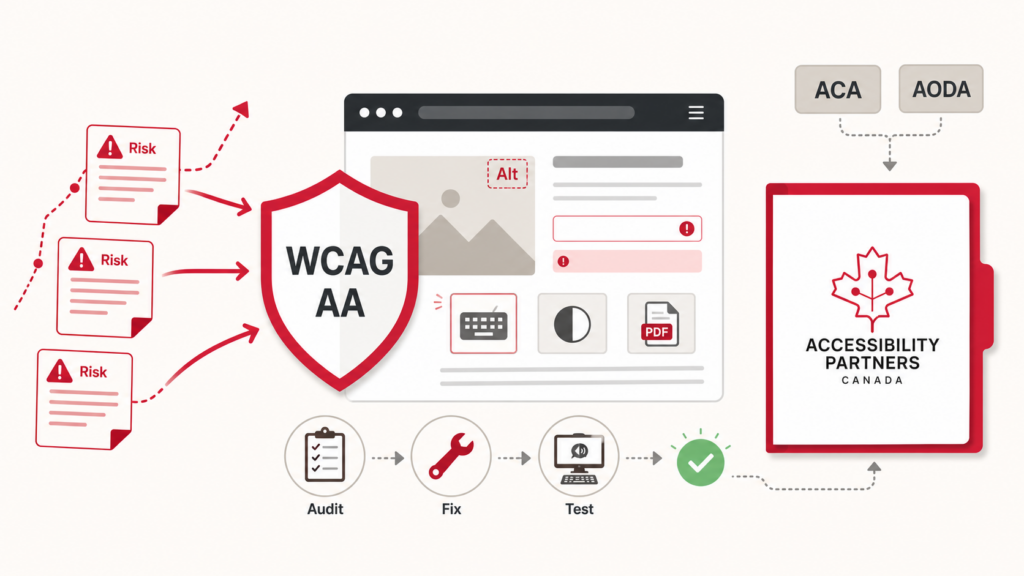
Incorporating WCAG 2.1 accessibility standards into web design does more than meet legal requirements under AODA or ACA – it:
- Creates equitable access for users with disabilities
- Helps meet customer expectations in an increasingly inclusive digital world
- Aligns with ethical business practices
- Reduces risk of accessibility complaints or accessibility lawsuits
Adopting these accessibility standards WCAG 2.1 helps businesses in Toronto and across Canada build stronger, more inclusive digital relationships with their audiences. Organizations planning a new website or redesign can benefit from professional accessible web design services Toronto businesses rely on to create user-friendly, WCAG-compliant digital experiences.
Use This Guide When Designing Your Next Website
While AODA currently mandates WCAG 2.0 Level AA, most Canadian organizations are voluntarily adopting WCAG 2.1 AA for broader accessibility.
As you design or redesign your website:
- Use WCAG 2.1 as your framework
- Test for responsiveness and contrast
- Focus on usable and accessible layout from the start
At Accessibility Partners, we test websites for WCAG compliance and help you implement accessibility from design to deployment.
Schedule a free consultation and learn what areas of your website can be optimized for better user experiences and inclusive design.